It was after dinner a few weeks ago, when Henry started showing me his Art History homework. He was making a large trifold board of his favorite pieces of art. He chose a Van Gogh, a Basquiat, an Ashley Longshore beside an ancient statue of Kali, etc.
“What about Toulouse Lautrec?” I asked.
“Who?”
“Baby!! Don’t you remember this incredible work by Toulouse Lautrec? He was the little guy who painted all the dancers at the Moulin Rouge? The artist who painted my tattoo, Le Chat Noir!” I held up my leg so Henry could see my ankle tattoo of the little black cat, based on the iconic Art nouveau poster from 1800’s Paris. Henry ignored me.
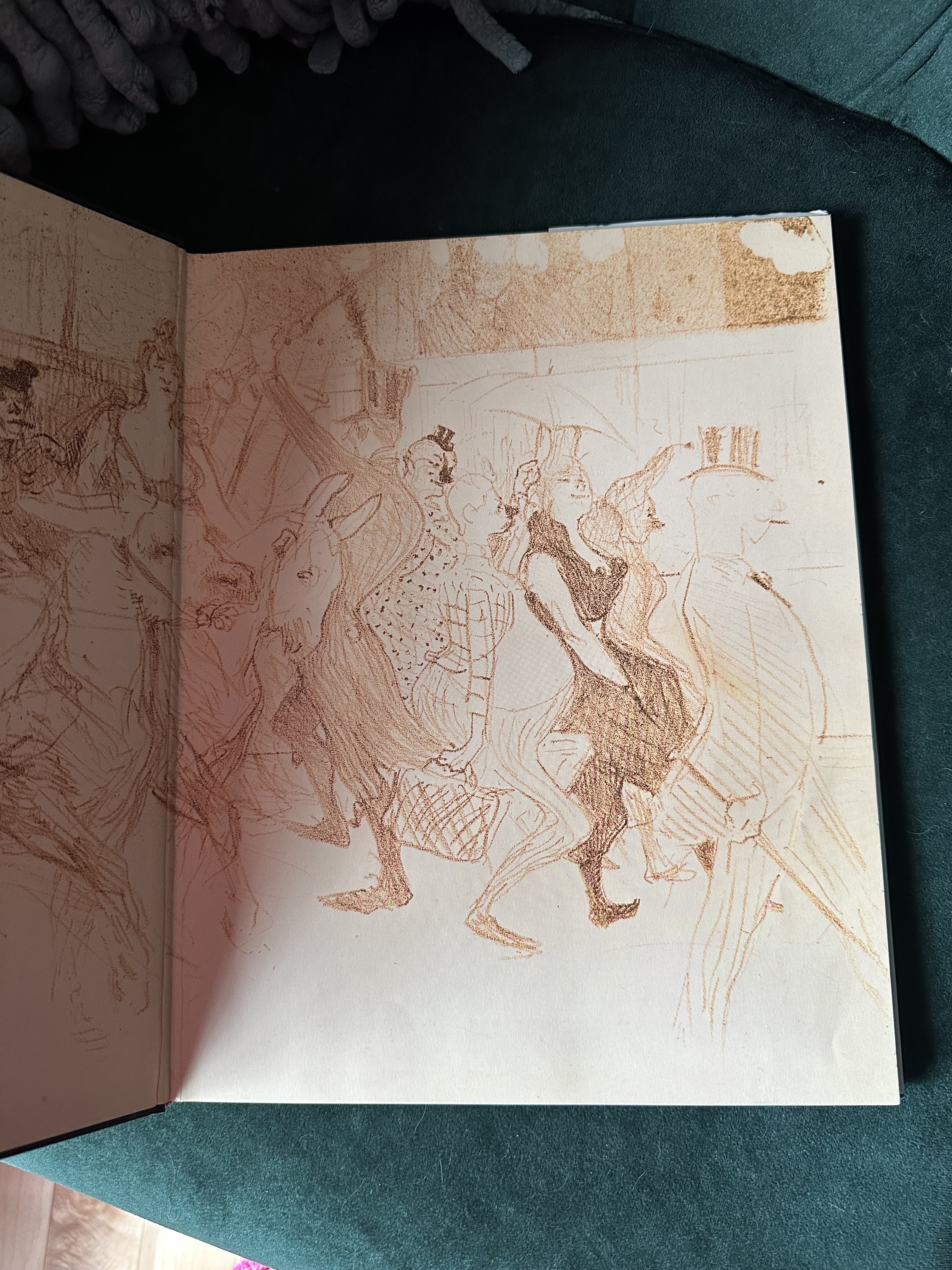
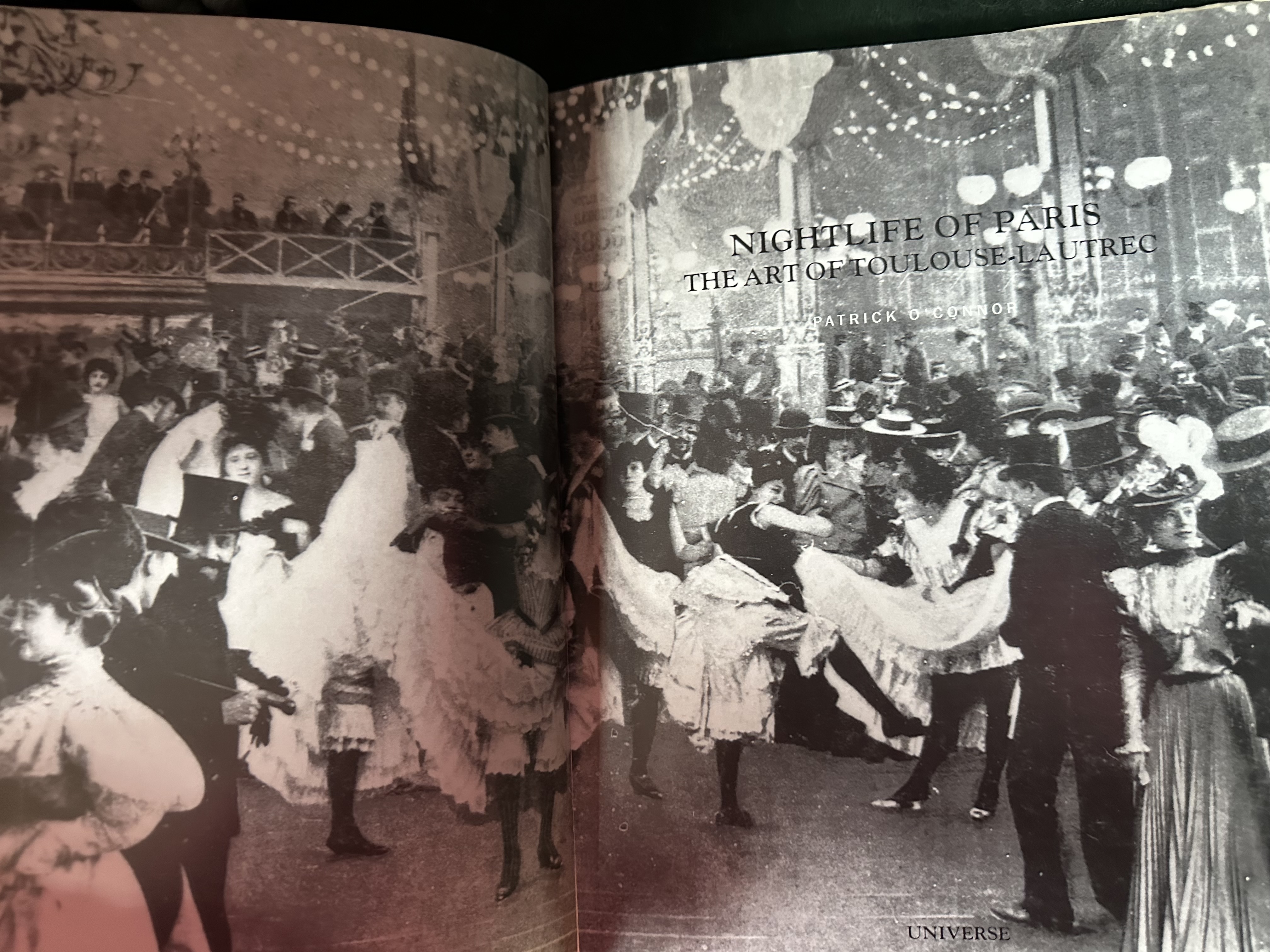
I ran and grabbed my old Toulouse Lautrec coffee table book to show him, the one I had bought back in the 90’s long before we all had tiny libraries in the form of a phone in our hands.
As I opened the book, my teenager still ignoring me, I abruptly stopped talking and plopped down on the couch, sucked into an art portal and a world I had discovered as a teenager, a world painted by Toulouse Lautrec. The pages rustled and quivered, thrilled that finally someone had picked the book up again and I almost heard a sigh when I turned the pages. It had been a long time since the book and I had connected, and I was transfixed by the images, so long unseen but so familiar and adored.
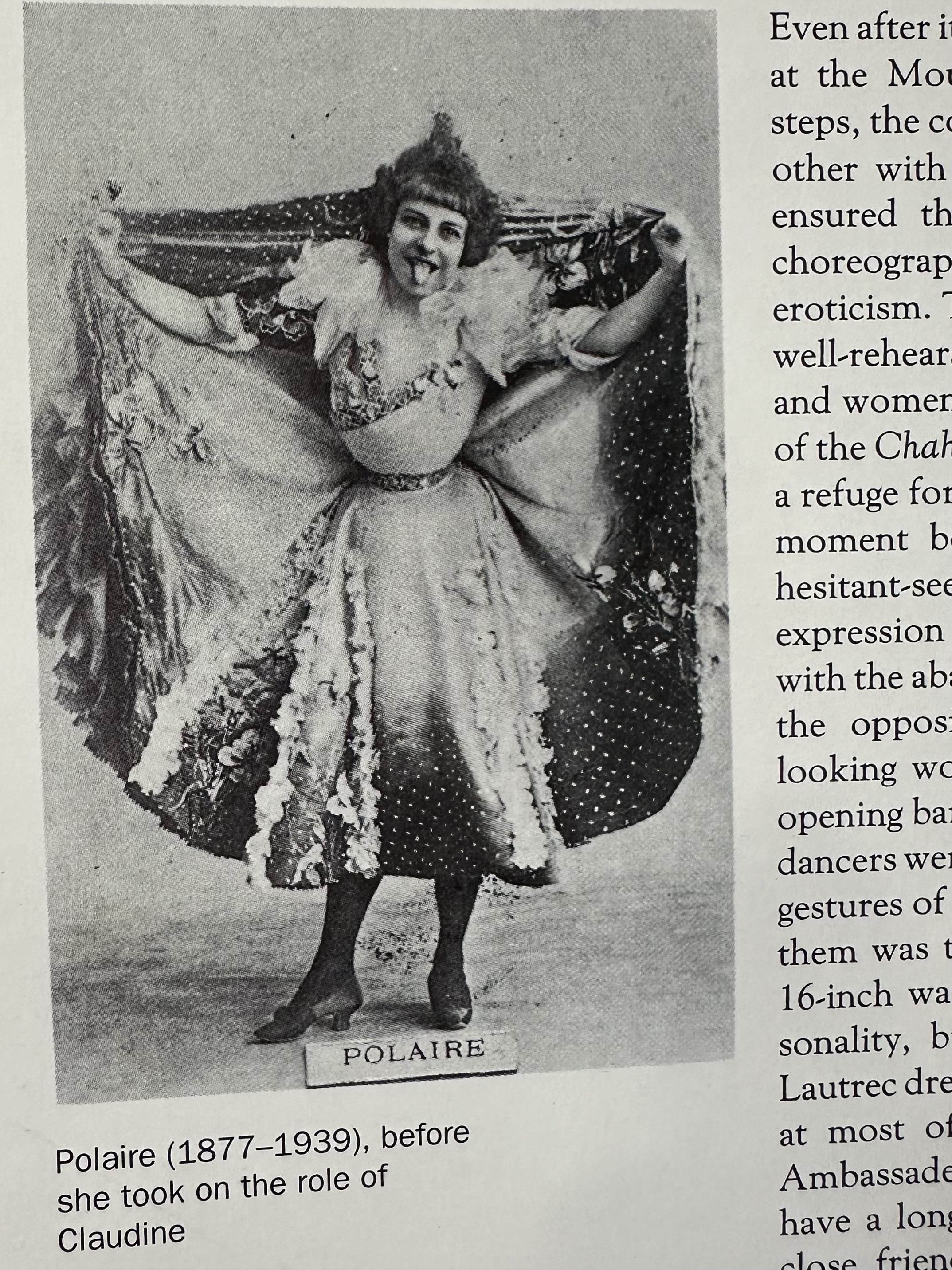
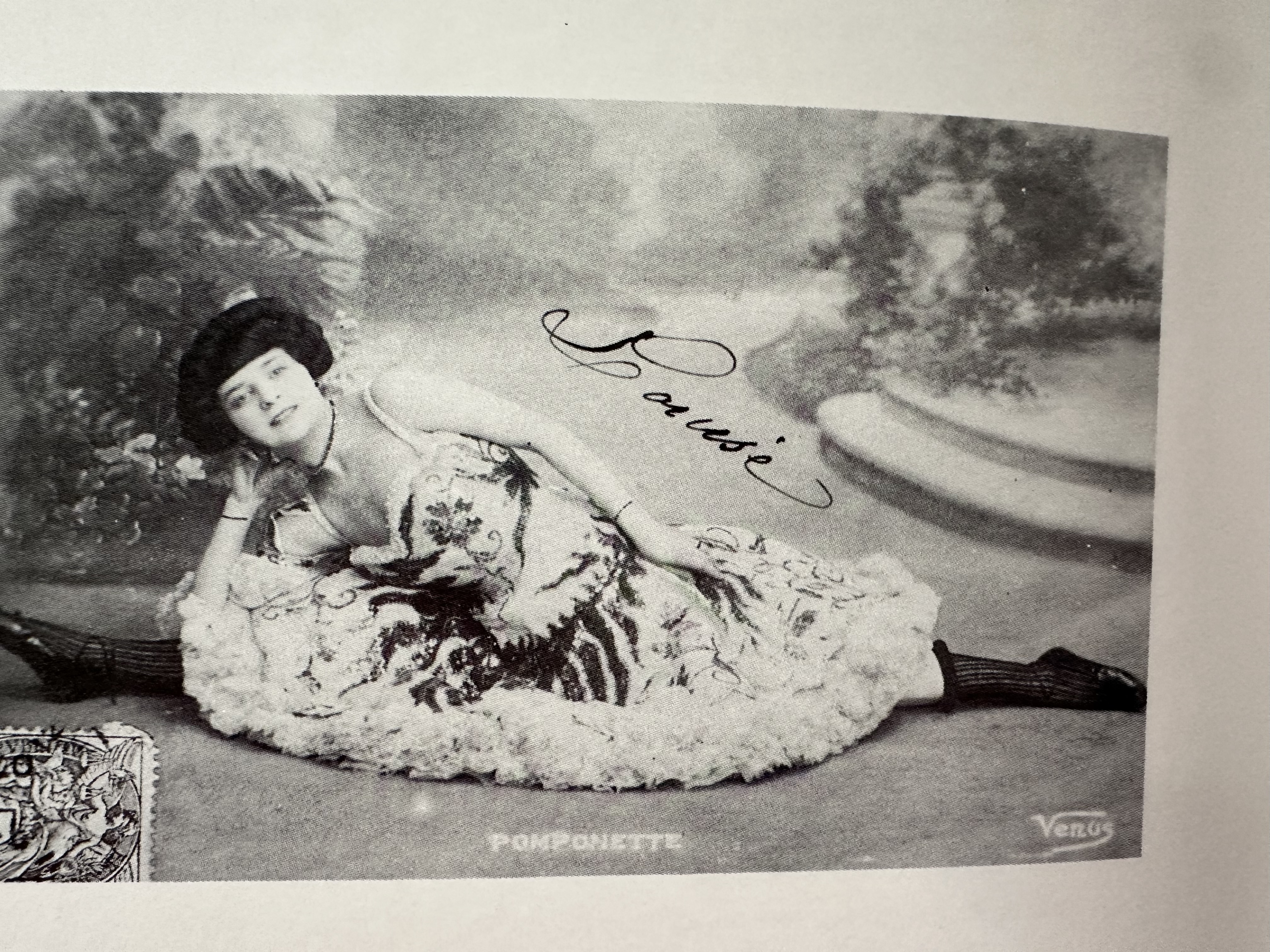
There was Toulouse in his boa, the story of his childhood accident that stunted his legs, and the place he found home–the Moulin Rouge, where the dancers and theater folk took him in and loved him, the place I loved most—the place of the theater folk. There were the dancers, La Goulue, Mistinguett, names long forgotten and unknown to most, but as familiar as old friends to me.
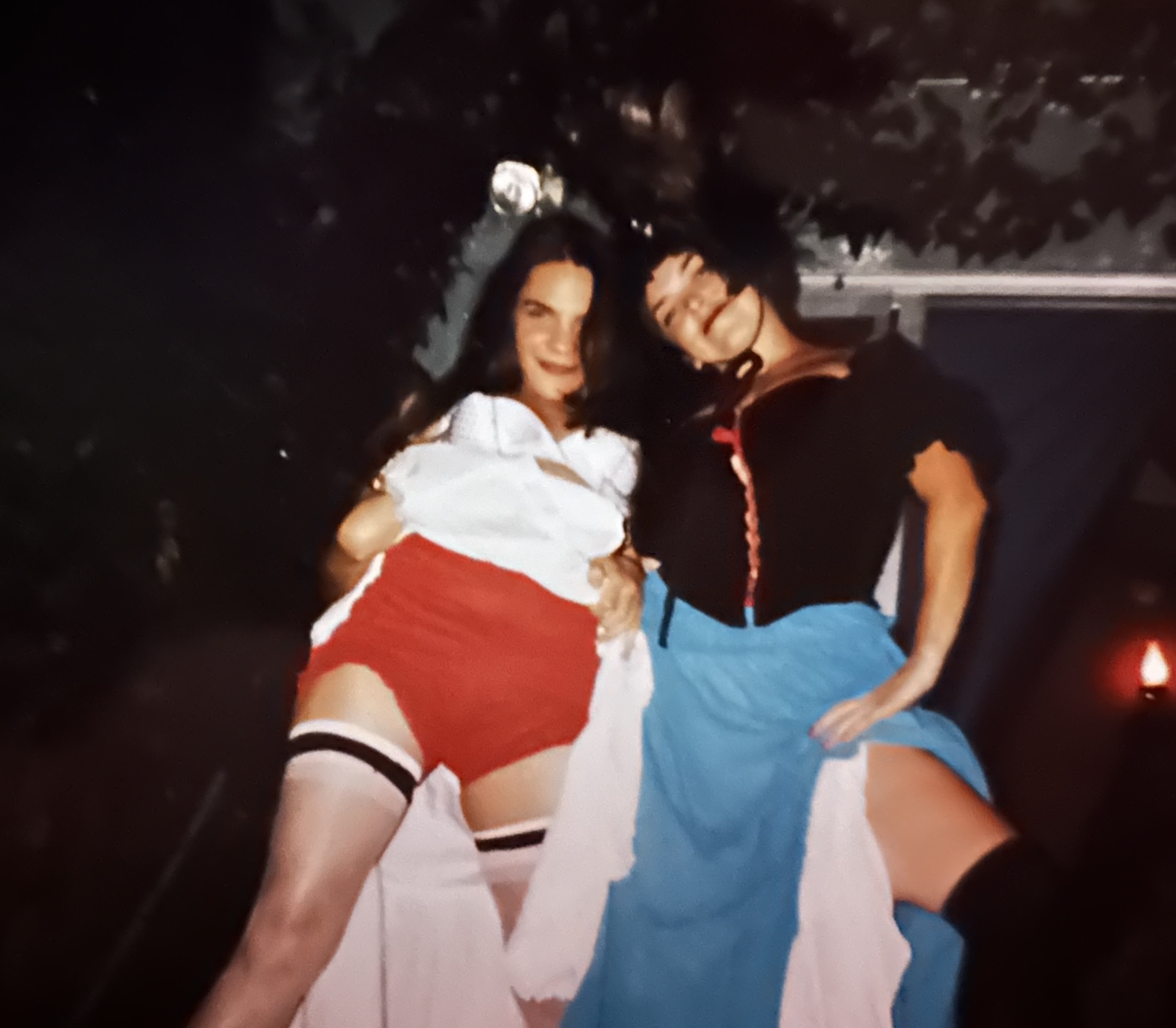
With each page, I remembered how I studied this art on my own, how I had fallen in love with Le Chat Noir, and found the brew that was mine in this art. Theater, but not serious sad-faced theater–uproarious theater, the kind that causes a frothy commotion that cuts through the serious like a knife through hot butter. There were the dancing girls, high-kicking frilly underwear, hats with feathers, that was the life I longed for as a young girl dreaming in a bookshop in my local mall in Utah, the life I ended up creating for myself. I ran my fingers over the woman sitting alone in a cabaret, lost in the green light, drinking absinthe.
Was that me now? Definitely.
The Art Nouveau font, that cat… why had I gotten that cat tattooed on my ankle? Because to me it represented Paris, magic, dancing girls, theater life, backstage, and the entire world I dreamed of, the entire world that was my view of heaven. To me heaven was not a big mansion on a cloud. It was a theater, with music opening portals to other worlds, soaring singers sending chills down my spine, dancers who took my breath away, the thrill of being onstage.
And Toulouse Lautrec was the kind of artist that captured it all while also being part of it. I loved the wild characters of my theater life during my LA years, the old vaudeville family living in a castle who carried fluffy japanese chickens on giant wooden spoons–I’d walk up their curving staircase and jumped in surprise as sugar gliders leaped to my shoulders and an African Pygmy hedgehog ran over my feet; the tiny girl in purple velvet who sang gorgeous arias while swinging upside down on her trapeze; kneeling in a fairy bower shoulder-to-shoulder with Kim at The Globe Theater, bathed in green foamy light, both of us fanning a fairy queen to sleep while Kim’s clear true voice echoed through the Globe Theater, singing a fairy lullaby; the little pimp I spotted sitting on a wall on Santa Monica boulevard wearing striped knee socks and calling himself Sugar Bear; the mermaid belly dancer Dolphina who played The Pink Panther on her saxophone;1940’s beauty Zepha dancing on a bistro table before her onstage volcano erupted in orange feathers, each of those feathers like a memory of my theater days.
But what did I love so much about Toulouse-Lautrec? What drew me to his story, his art, besides the fact that I knew if I were alive back then, we would have been friends. (I never longed to be one of the “society girls” parading about in stiff silk skirts and spending my days swanning about, dressing for meals. No. I would have run away to the Moulin Rouge and spent my days practicing my high kicks in frilly knickers.)
I decided to think about it for a while. Weeks passed, and as I started researching for my new film, I came across a character from old time radio called Boston Blackie, a former jewel thief and safecracker turned private detective. His tagline? “Friend to those who have no friend.”
Ahhhh, ding! A bell went off in my head. That’s why I loved Toulouse–he was a friend to the friendless, and that is me too.
I started researching Toulouse even more, and discovered to my dismay and delight, that he was not the artist of Le Chat Noir! Did I already know that? I couldn’t remember. This is my mind these days–unreliable. I had gotten a tattoo of the black cat back in 1998 in Paris in Montmartre to show my love of Toulouse Lautrec thinking how wonderful to have such art on my body forever.
Except it wasn’t his art.
It was the art of a cat-loving artist I never heard of–Theophile Alexandre Steinlen, a guy who did not paint the dancers at the Moulin Rouge. What? Was my tattoo really the work of a random catlover from 1800’s Paris? (I don’t even want to tell my sister who would laugh herself right off the phone because this entire fiasco is right in line with the nickname she calls me: Inspector Clouseau.)
Did I care? Well, I cared a little because well, I had thought I had Toulouse’s work on my ankle.
But Theophile was also part of the Montmartre bohemian art community, and he actually knew Toulouse, and I mostly just loved the tattered cat on Le Chat Noir, so maybe it didn’t matter who created it. Maybe it was more about what it means to me–which is literary art-loving Paris and everything Le Chat Noir stands for, a place thought to be the first modern cabaret, a place described as part artist-salon/part rowdy-music-hall, which could be a description of my own mind.
Do I take solace in learning I’m not the only one who believed Toulouse painted Le Chat Noir–he is credited with the artwork by many reputable places. No.
And does it even matter? I love cats, I love rowdy music halls and artist salons, and a central reason I love them is because of their nonjudgmental-open-arms-attitude to the world. All are welcome. They are friends to those who have no friends, just like cats, who seem like they would be friends to no one as evidenced by my own cats who sit on the kitchen counter with their judgy imperious pink noses in the air, and yet you find them prancing across kitchen counters in the homes of misfits everywhere, so maybe secretly they aren’t judgy at all.
I’m just confusing myself now. That’s what happens when you get a tattoo in honor of an artist and 30 years later find out your tattoo is not by that artist you adore. And you might have already known that, but you can’t remember so it seems a surprise.
Also, while getting said tattoo in Montmartre in 1998, (it HAD to be Montmartre of course, because it had to be aplace with the energy of the misfit artists), the tattoo artist started drawing art-deco style lines over the cat’s head. “Hey! What are you doing?” I yelped. He looked up at me, “Artee-stic Lee-saunce,” he answered, continuing his work.
I shouted silently in my head because I didn’t want to be rude: “Artistic license? On my ankle? Shouldn’t you have asked first?”
But it was too late, he had already started his arteestic-leesaunce with my ankle as his canvas, and I had to let him finish, and isn’t that the point of all art anyway, including body art? It is the individual expression of the artist. In the end, my own little Le Chat Noir didn’t look exactly like the not-Toulouse-Lautrec poster anyway. Similar, but definitely not the same, so in the end, it wasn’t not-Toulouse’s work anyway, it was the work of a random tattoo artist in Paris.
And Toulouse or no Toulouse, the tattoo reminds me of my love of rollicking cabarets, of joyful art, of those living works of art known as cats, and of course my love of Paris and all things artistic, creative, literary, wild, anything that punctures through the pain of grief and loss that is ever-present in this sad and beautiful world.
And then I remembered taking Henry along with my daughter Annabelle and my niece Zoe, to Musee D’Orsay in Paris to see Toulouse Lautrec’s art, and whether they understand it now or not, I hope it comes back to all of them when the world seems too much, (which for me is every day), I hope they can always find the joy that punctures through the pain.