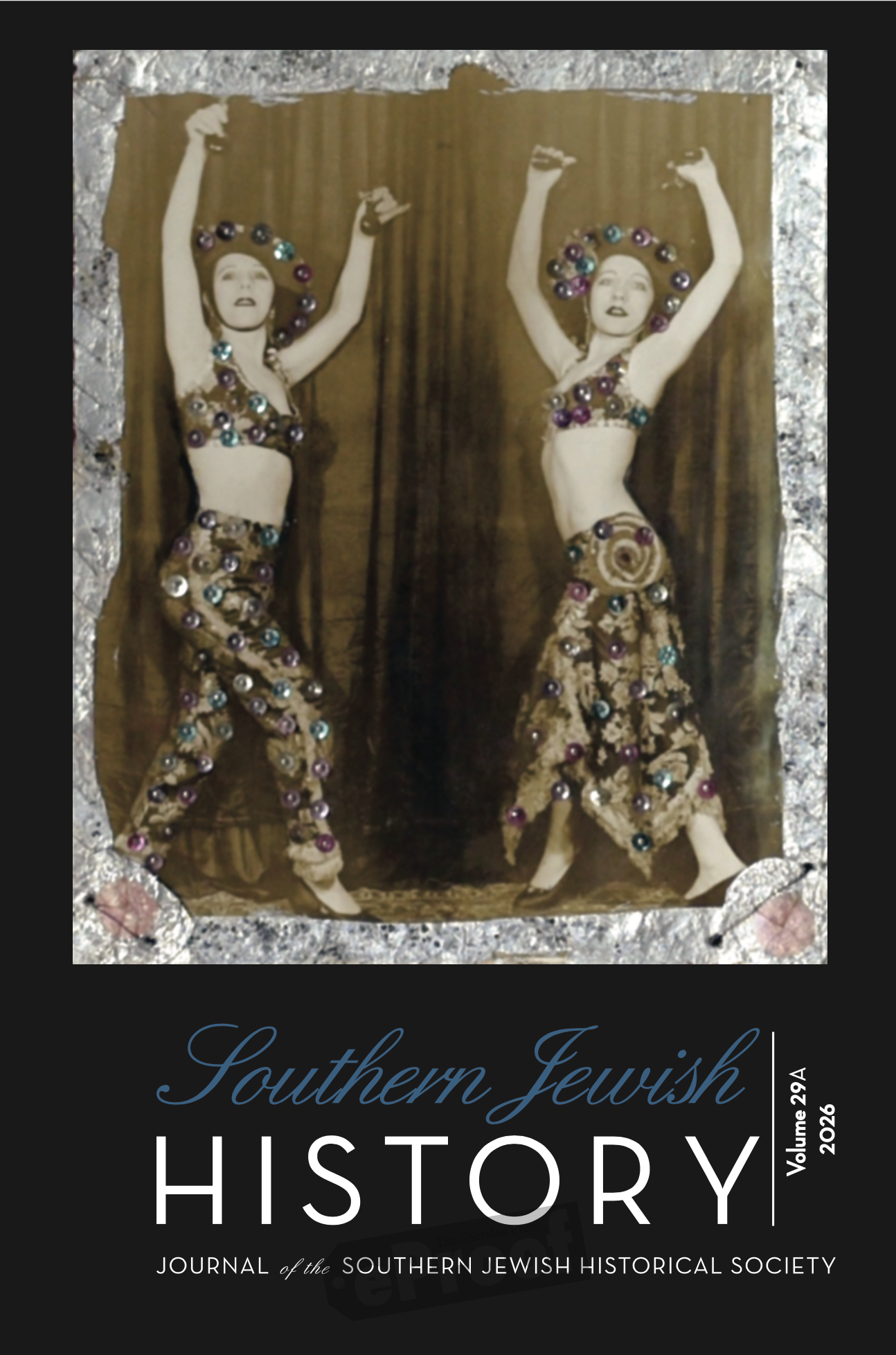
Dearest Gentle Readers,
(Please bear with me while I am in my Lady Whistledown moment)
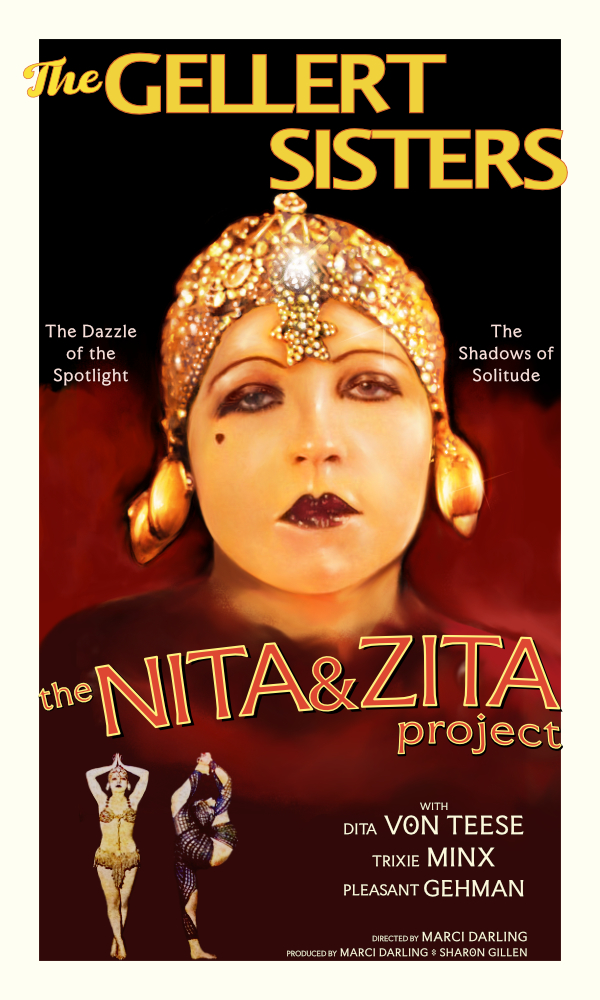
The scholarly social whirl continues for The Nita & Zita Project. While we couldn’t resist partaking in the scandalous intrigues of the Parisian salon and the Bordeaux Chateau, we soon traded those in for a deliciously exotic location —the wild and untamed land of Romania, home of our favorite glittering globetrotters Nita & Zita.
Traversing the foothills of Transylvania in a tiny Honda, 4 intrepid voyagers in the form of Marci Darling (Director), Sharon Gillen (Producer), Stefanie Naifeh (Film Music), and Courtney Mico Nelson (Associate Producer), set off an an adventure of the wildest variety.
This town of Baia Mare was called Nagybanya, Hungary at the time of the sister’s residence, a completely different language and culture, but the history is the same and hang onto your hats, gentle readers, we learned all sorts of historical tidbits that could have, would have, shaped our beloved dancing duo.
Baia Mare is a locale, one might observe, that has exchanged its gilded cages for literal, though now-closed, gold mines. How perfectly fitting that a city whose very name means “Great Mine” has built a new reputation on burying its industrial past beneath a verdant layer of green space.
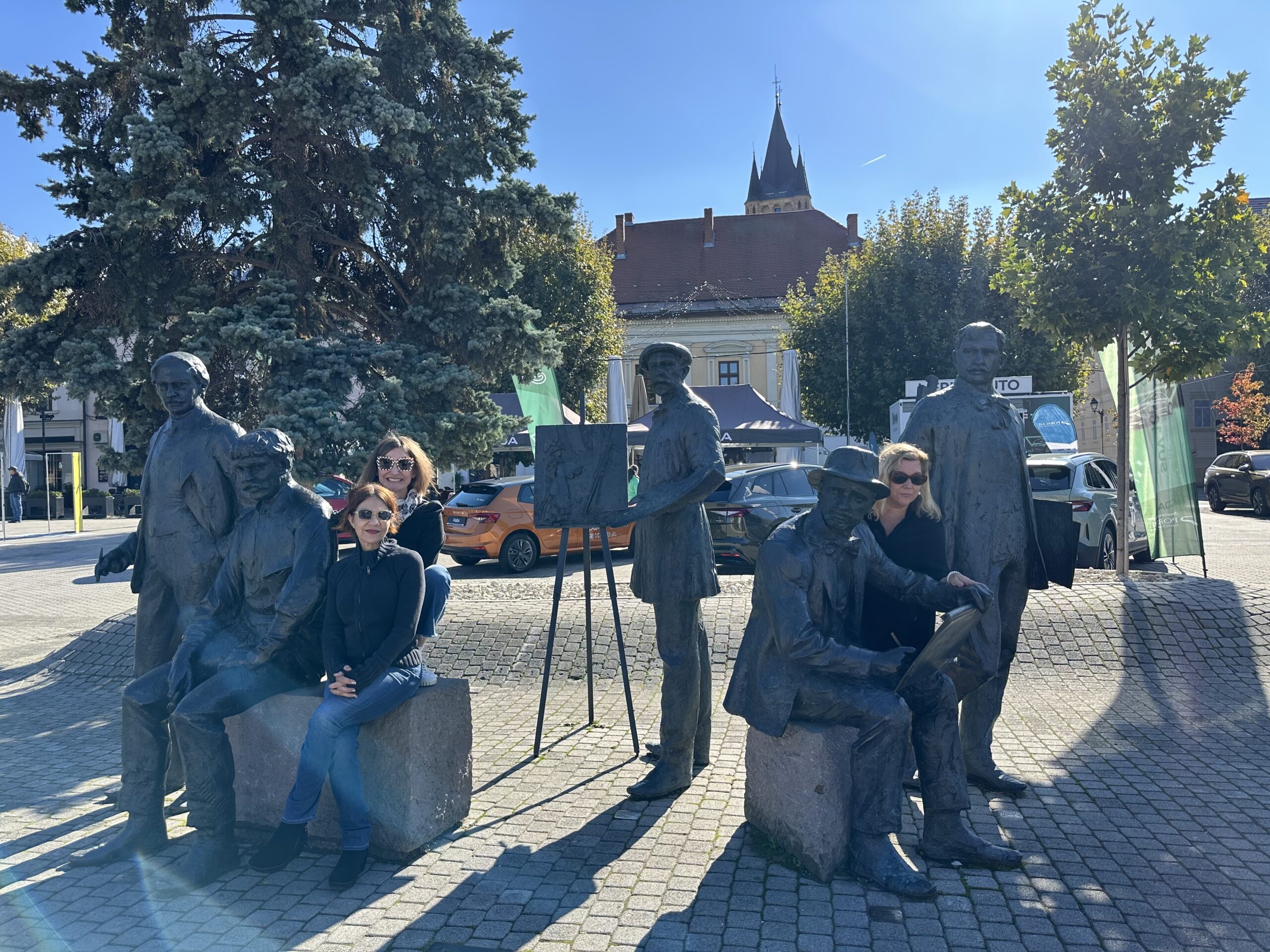
It is said that a town’s history is written in its people, and a fleeting glance suggests the residents of Baia Mare have long been acquainted with hard work. Yet, beneath their stalwart exterior, one finds a surprising devotion to the arts. Where once the earth yielded mineral treasures, the town now mints artists from its renowned colony, who paint en plein air amidst the Gutâi Mountains. Such a dramatic shift from subterranean labor to sun-drenched canvases is enough to make even the most cynical observer marvel. In other words, the mayor of Nagybanya invited celebrity artist Simon Hollosy to return to his hometown to paint. He accepted this invitation and from 1896-1901, brought hundreds of artists to paint around the town. As you may remember, 1896 is the year of Flora’s birth, and she would have grown up seeing artists set up with their canvases all over her town. In 1901, the tradition grew, with several schools of art popping up and thousands of artists from all over the world coming to this tiny town to paint. Artists blossoming among the miners…how utterly perfect for a pair of starry-eyed dancing sisters. There is even a set of statues of artists in the town square!
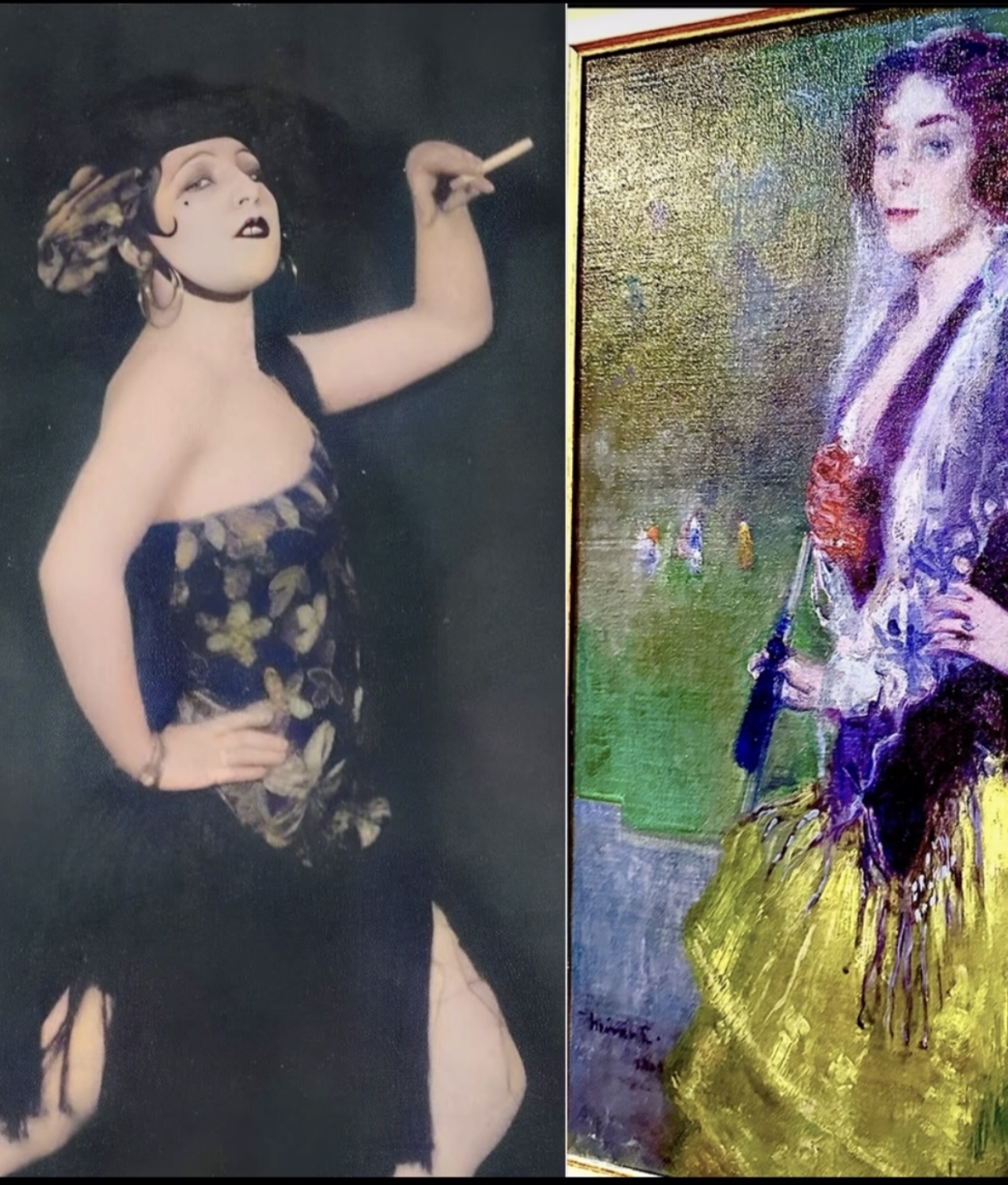
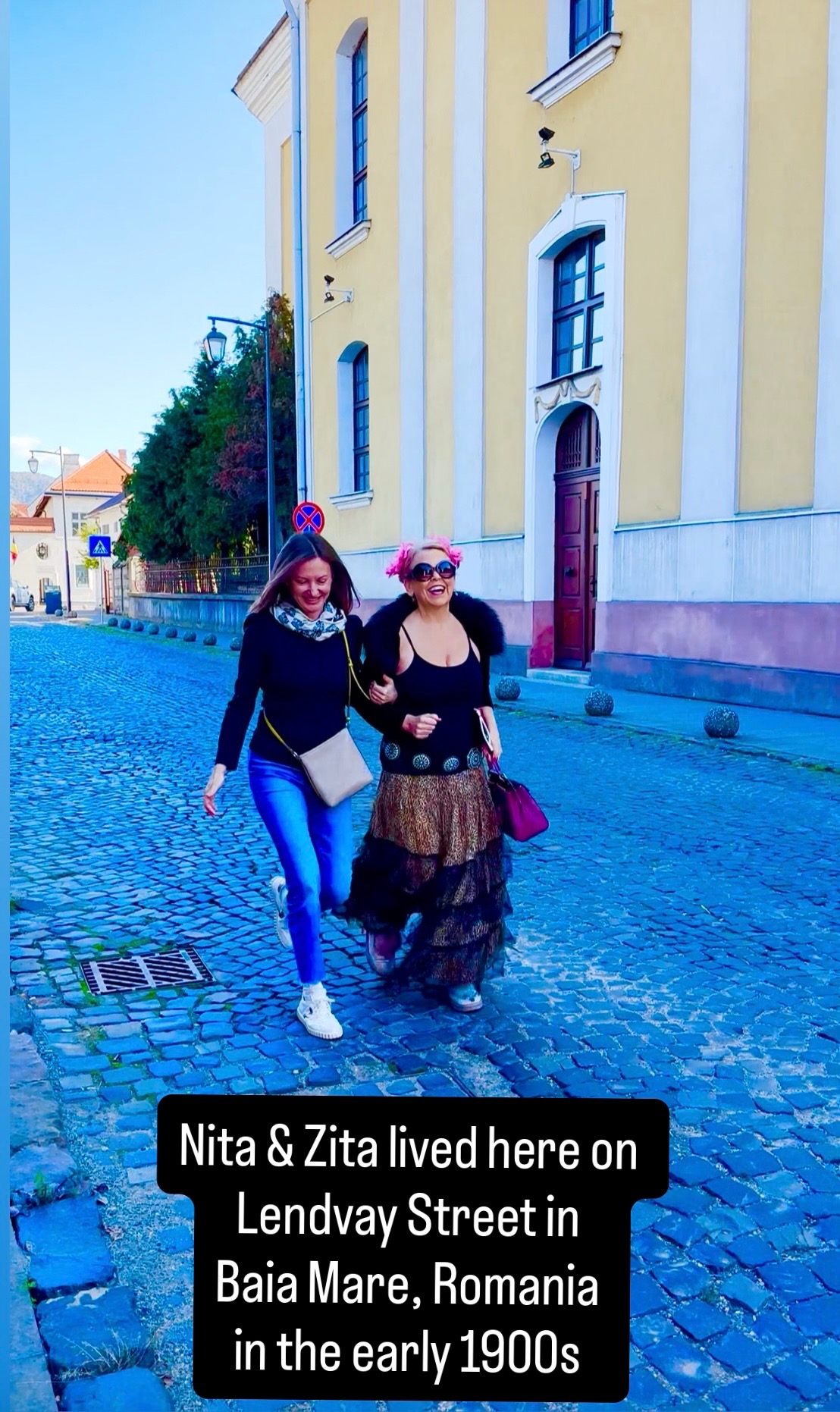
Piroska, born in 1904 into this rich tradition, would also have grown up in this enchanted environment. We learned that the Gellert family listed their residence on a charming little cobblestone street called Lendvay Street, leading straight to the original town mint, now the Museum of History.
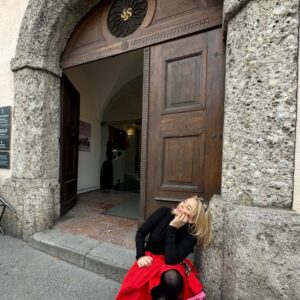
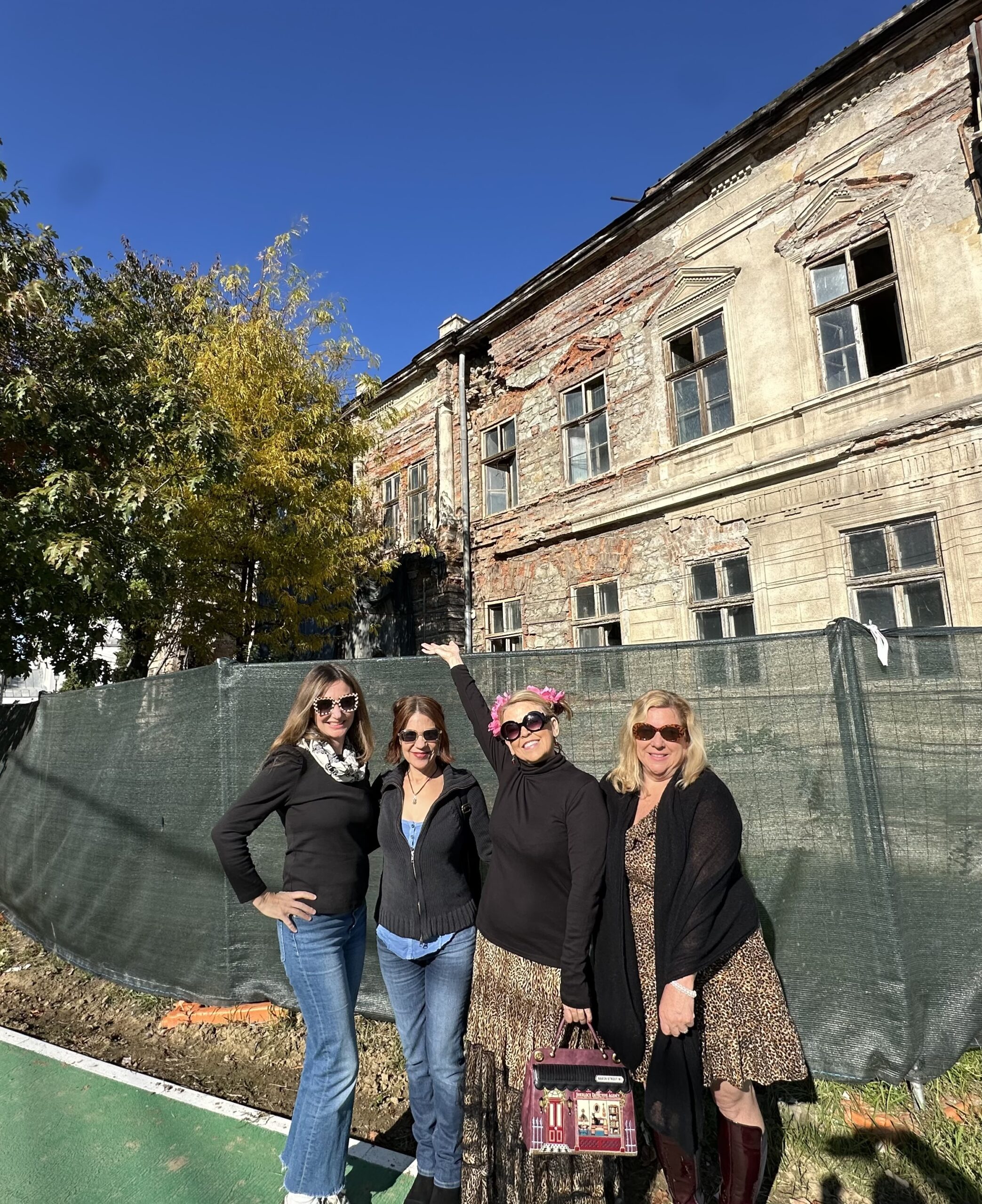
We recently learned that Flora completed her education in a school for girls that taught handiwork or trades called Polgari Leanyiskola and we were able to visit this school. Flights of fancy filled our heads as we imagined young Flora running up and down the stairways while learning her sewing skills and staring out the windows imagining a different kind of life for herself, one of glamour and travel, whimsy and wonder. The school is now collapsing under age, but has plans for renovation.
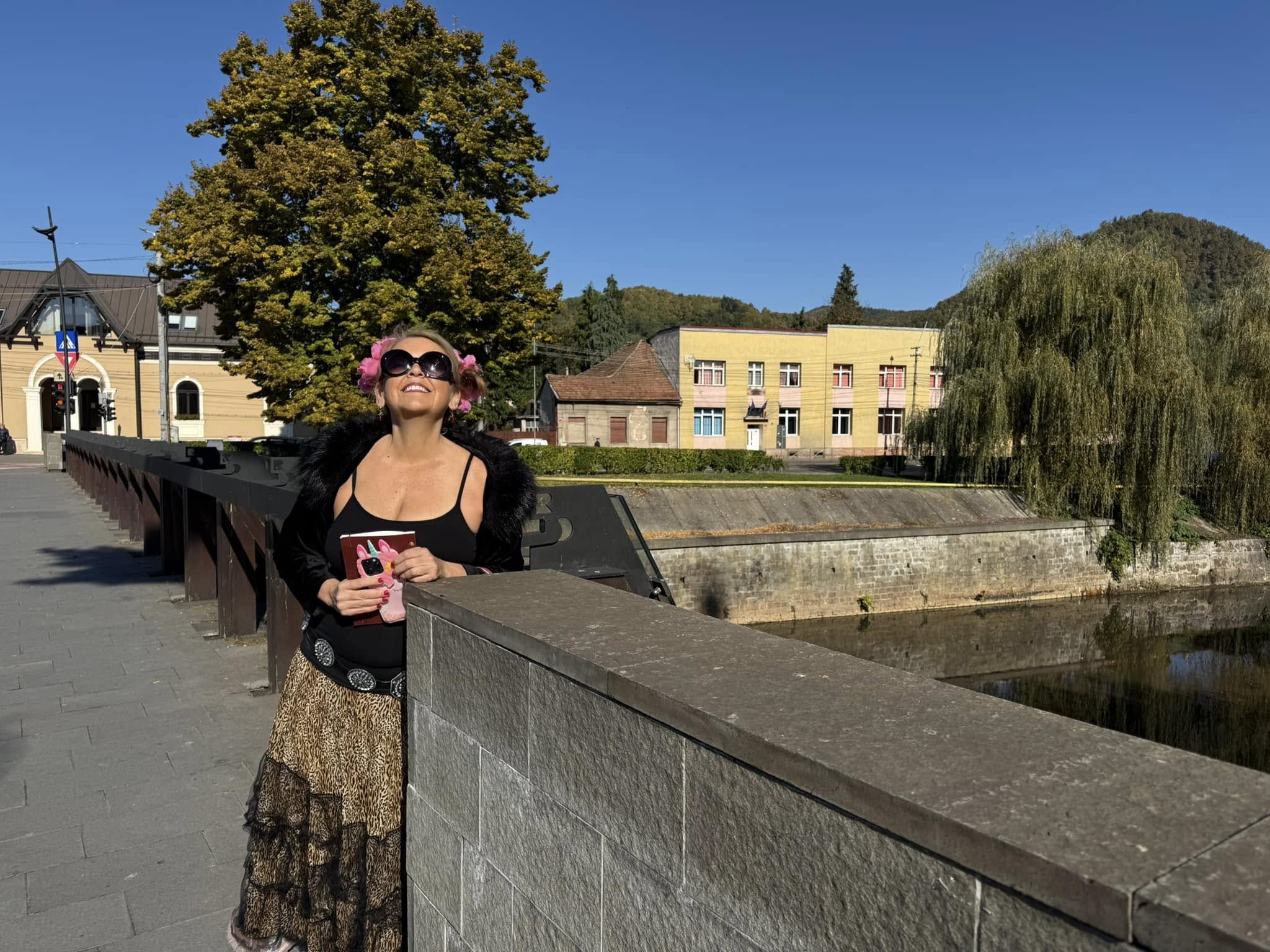
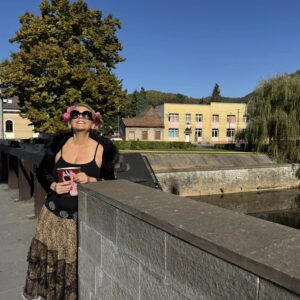
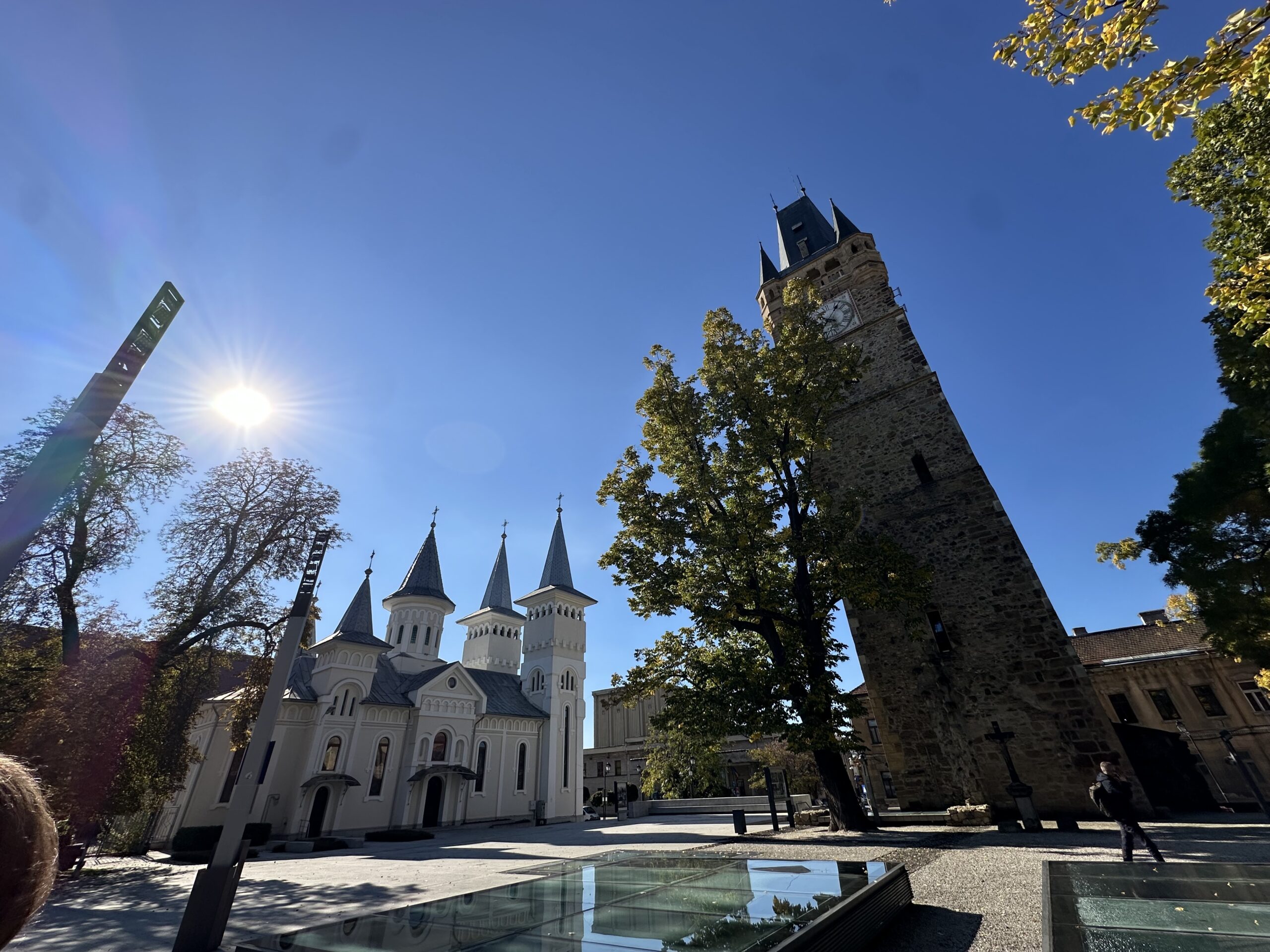
Upon our recent visit, we could not help but notice the peculiar blend of old and new. The preserved medieval old town and its iconic Stephen’s Tower, a clock tower said to have been built in the 1300’s, provide a charming backdrop for the new breed of citizen who, rather than toiling underground, now indulges in fine dining at a culinary soiree.
We drank cappuccinos in sparkling new coffee shops run by pretty young people, and tried not to be deterred when we invited the coffee-maker to our screening at the local university and he replied, “There is no university in Baia Mare.” Of course there is a university in Baia Mare, churning out serious scholars, Fulbright scholars, and many history-loving young people who now run the museums and work in the town politics trying to change things. Bravo young people!
Of course, no exposé would be complete without a hint of scandal, and Baia Mare is not without its own skeletons, and I mean literally. We ate twice at a beautiful restaurant in the old town called Shakespeare. We asked the owner if there were ghost stories. Of course! He led us to the medieval cellar with its secret chambers and stone archways where he found a skeleton while renovating for his restaurant and regaled us with tales of hidden rooms, broken ancient stones with the initials of an infamous demon, a singing monk strangled by said demon, and rumours of alchemy from medieval times.
A sordid affair that makes for delicious storytelling. Nowadays, it appears the town’s true worth is measured not in precious metals, but in the vibrancy of its festivals, the artistry of its painters, its ample surrounding mountains and of course, its legacy of two dancing girls who would grow up to change the world. At least they changed my world…
Perhaps the most fascinating gossip lies just beyond the city’s verdant parks—in the nearby Merry Cemetery. Here, death is not a source of sorrow, but a colorful and humorous tale etched onto wooden crosses. What a refreshing contrast to the hushed and mournful funerals of the high society! It seems that while the London elite hide their scandals in the grave, the Transylvanians delight in announcing them to the world in a riot of color. Can you think of any other towns or cities who do the same with their sacred dead? Perhaps one with brass bands, fringe umbrellas, and Second Line parades?
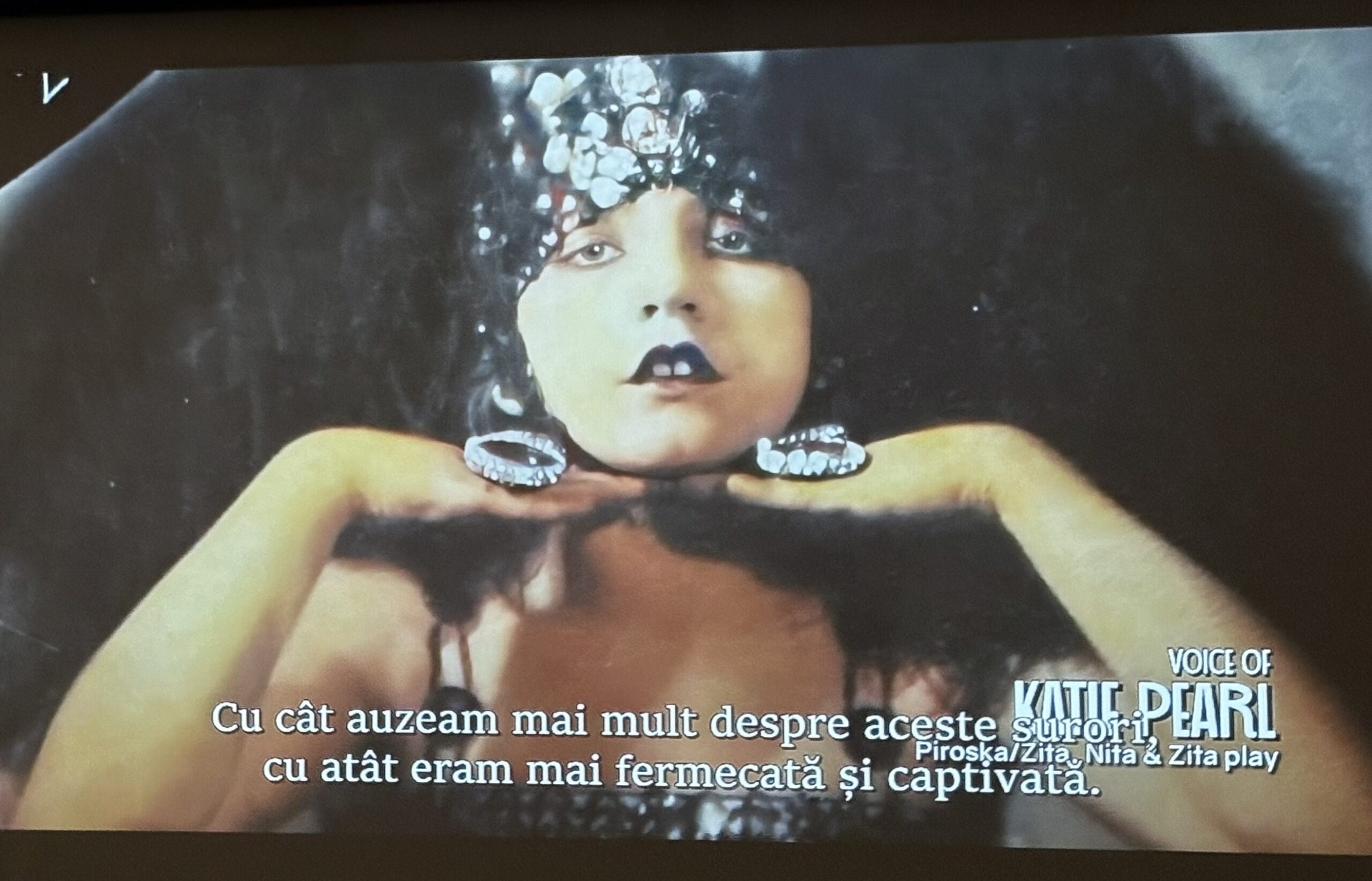
I know I’ve kept you all waiting with bated breath for a review of our actual screening, and I must say it was wonderful. Many locals from surrounding towns showed up and a professor from the (nonexistent?) university had added Romanian subtitles to the film.
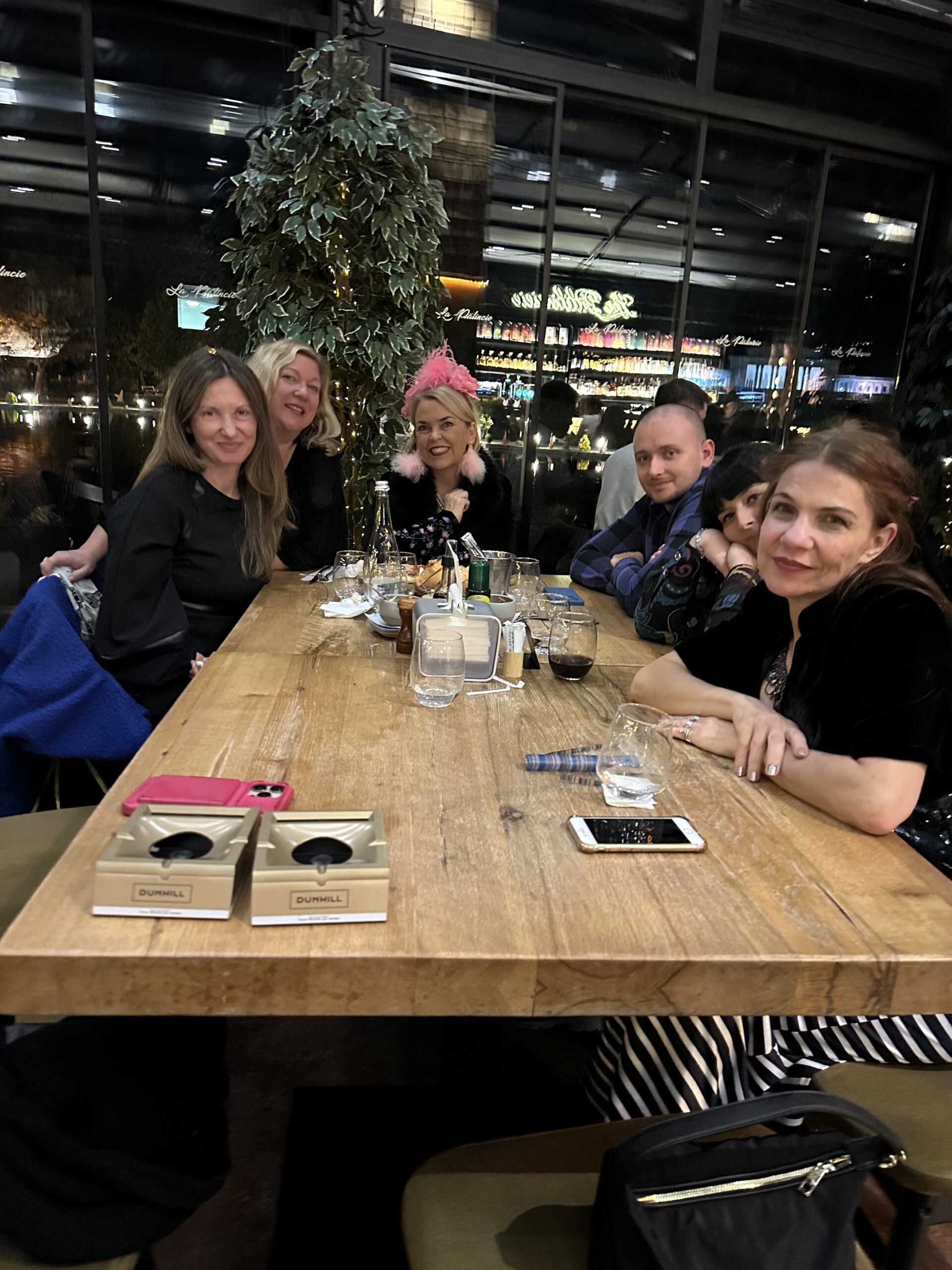
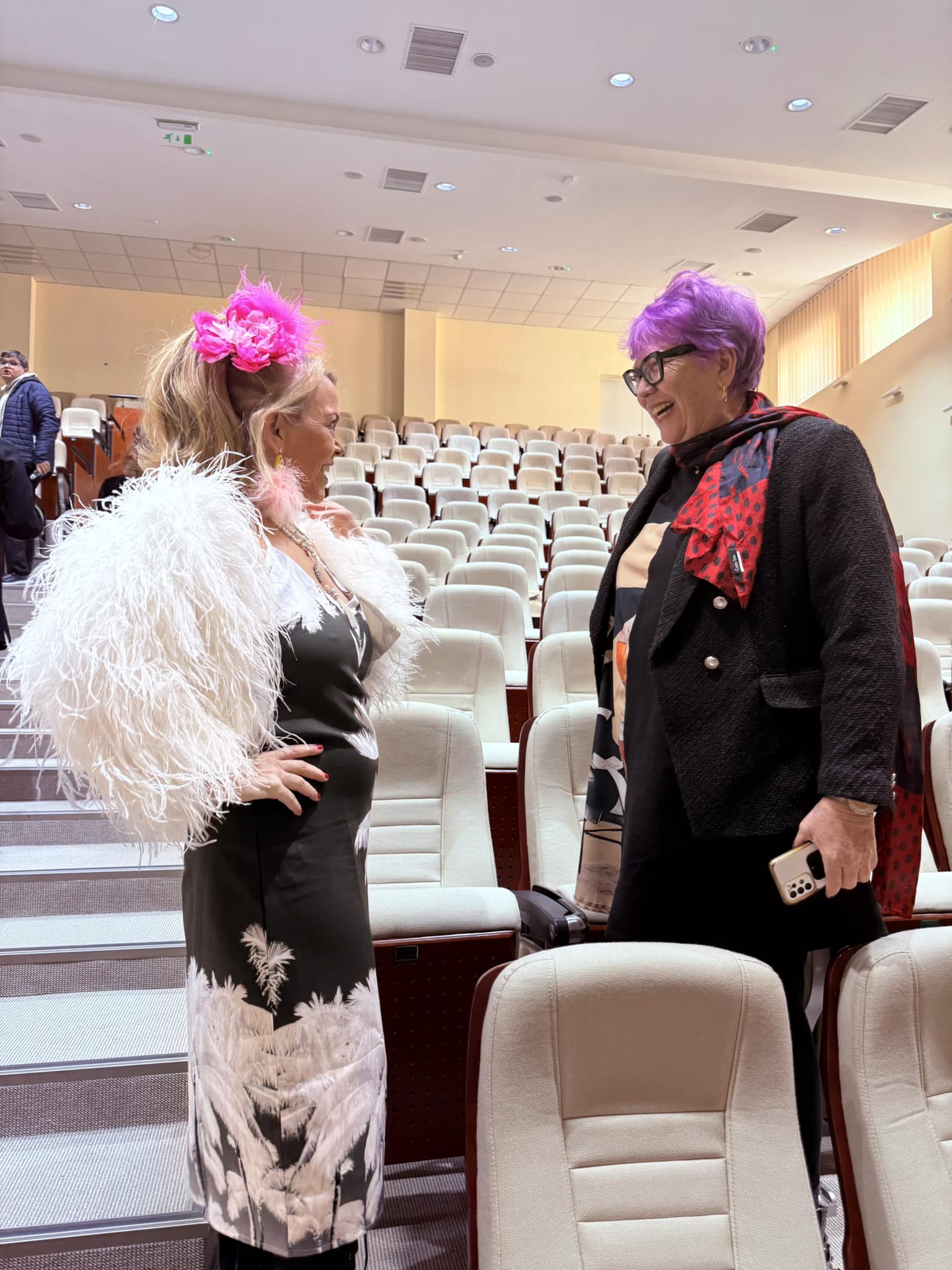
On a more serious note, we were deeply moved by the people who came to our screening, and by visiting the now-empty synagogue which stands locked up, a testament to the thousands of Jewish families who were taken to concentration camps, never to return. Heartbreaking. Our host, Robert Cotos, (pictured below at dinner) created a nonprofit to find the names of these lost local families and we were honored to be part of his work. Our world is so sad, gentle readers, an ever present reminder to me to forge ahead and tell the stories of those who can not tell their own.
This author, for one, finds this all a most intoxicating mixture. A society seems to always be attempting to scrub clean its past, for better or for worse, while its deep-seated nature continues to bleed through the fine linens of modernity. It is a masquerade of the highest order, and if I am being quite honest, I emerged from Romania changed, transformed in some way that is difficult to be put into words.
But here I sit, quill in hand, aching to learn more, to honor, to celebrate, to experience it all.
Yours in perpetual observation,
Lady Scrumptious
AKA Marci Darling
Please be sure to check our society pages: @nitazitaproject for images from our voyage AND we would be forever grateful if you could please leave us a review on Rotten Tomatoes!