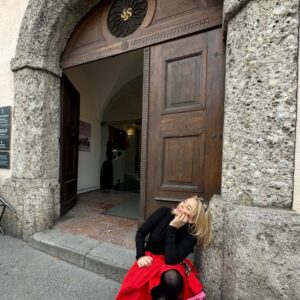
I live in “lusquiver.” No it’s not a town in New England you have never heard of, nor is it a kingdom springing from a fairy tale. It’s a word I stumbled upon in my current favorite book, The Dictionary of Obscure Sorrows.
“Lusquiver” is defined as “caught in the monotonous drudgery of life, as mediocrity weaves itself into the fabric of the everyday, the soul aches for an escape, yearning to shed the weight of the drearily familiar and step into realms unexplored.” From Latin, ‘luscus’ meaning ‘wanting, lacking’ and English, ‘quiver’ meaning ‘to tremble’.
So for me, I live in a constant “yearning to tremble for something beyond the mundane,” something delicious, extraordinary, something that makes my heart beat like mad.
What do I yearn for?
The one thing made of delicious yearnings, the one thing I can only find on a train as it rumbles across a mountain in a faraway land with waterfalls and meadows of wildflowers out the window and the occasional stop to dance barefoot under the moonlight.
That one thing is traveling.
By the time I was a teenager, I knew what I needed to do– I needed to hold the world in my hand and crack it open so I could see it all–the wonder, the magic, the marvelous, the yearning, the ache, even the pain.
It wasn’t a desire, it was as necessary to me as breathing. I didn’t come from a family who traveled. I didn’t come from money. What I did come from was a childhood filled with unwavering curiosity about the world. I had to travel or I would die, it was that simple. I wanted to experience the meaning of the words “wonderful,” “magical,” “extraordinary.” I wanted to pluck stars from the sky in faraway lands and weave them in my hair as I walked cobblestone streets surrounded by people speaking a language I didn’t understand. I wanted to see for myself the things I’d only read about in books, to take the world by the tail and shake it and see what fell out.
I’ve often written about my childhood memories of warm summer nights sitting on my parent’s porch in Utah, listening to the rumbling of the Southern Pacific train in the distance.
It turns out the Dictionary of Obscure Sorrows has a name for this too, this “half-forlorn, half-escapist ache of a train whistle howling in the distance at night.” The author calls it ameneurosis, combining “amen” meaning “so be it” plus “neurosis” meaning an anxious state, and amaneunsis, “an assistant who helps transcribe newly composed music.”
I might call it “symphonache,” a symphony of ache felt when looking up at the night sky, or holding an old tattered map in one’s hands, or getting on one’s knees to look closely at an old globe, carefully turning it to see the delectable names of all the marvelous places still to be explored.
Of course this ache grows even sharper, more jagged, with my other constant yearning, the one to put my arms around the ones I’ve loved so much that aren’t here anymore, the exquisite memories that live and take root in the wilderness of my mind, growing into a raving and rapturous forest of transcendent stories. Sometimes I imagine a forest of magical beings living in little cottages with smoke coming out of the chimneys while they stitch together tapestries of my favorite stories, leaving out the painful ones.
But then I think… what if transcendence ONLY comes with tragedy? What if my aching sadness is always surrounded by the soft velvet knowing that it only exists because I loved?
Fearless love, the kind of love that gallops wildly through thunderstorms, screaming with delight;
the kind of love that invites me to run up and down the spiral stone steps of a chateau in Bordeaux while wearing a long pink skirt with tiered, ruffles (I love the skirt rustling and draping behind me down the steps);
the kind of love that whispers to hop a boat on the Danube just so I can run from side to side, marveling at the magnificent lights of Budapest;
the kind of love that pulls me to jubilantly swing dance in the old torture chamber in Paris with friends I just met, the same chamber where I danced as a student 35 years earlier and as I threw my arms up into the air and shook my hips, it became very clear that time doesn’t exist at all. Someone made it up.
I’m still me, the same girl I’ve always been and will always be, with the same heart that craves wandering, the same heart that seems quite willing to love so much, even though it knows with that kind of love, sorrow isn’t far behind.
I tell myself I know quite a bit about sorrow, which is to say of course, that I know nothing. It’s difficult to explain, but essentially, if someone came along and said “Marci, I can take away your sadness if I just remove the love. A fair trade–every moment of sadness for every moment of love.” I would reply, “No thank you. I will keep all my sadness so I can keep all the love.”
Am I even making sense?
The Dictionary of Obscure Sorrows starts by saying that “the word sadness originally meant fullness,” from the same Latin root satis that gives us the words sated and satisfaction.” The author writes that the word sadness does not mean “without hope.” It means “the opposite, an exuberant upswelling that reminds you how fleeting and open-ended life can be.” The author takes words from multiple languages and stitches them together to create new words in an attempt to name emotions we all feel as human beings, but that we have no words for. I love this.
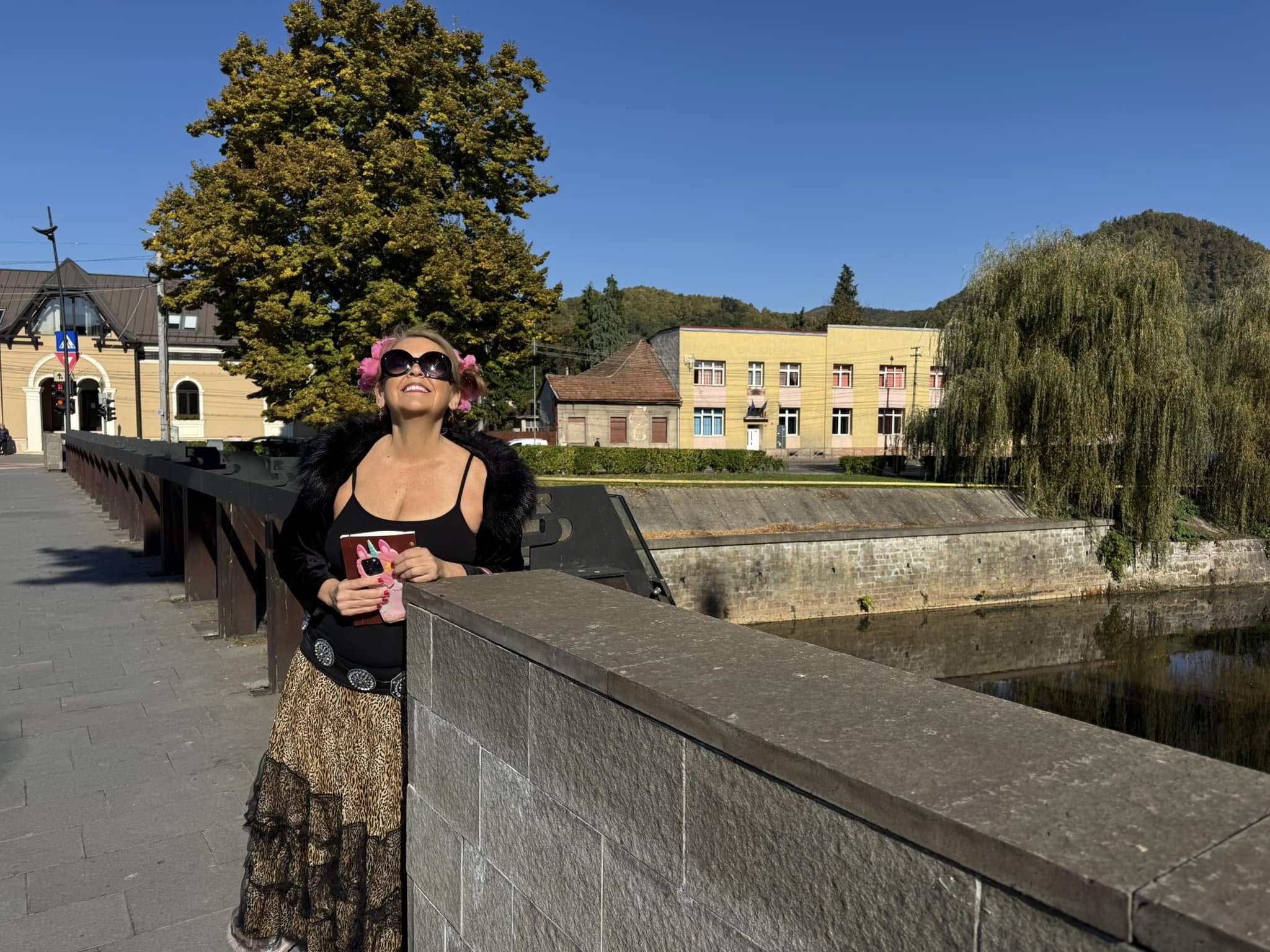
I was recently standing on a small bridge in a tiny town in Romania on one of those glorious October afternoons where the air is a bit crisp but you don’t feel cold because you can actually feel the sun soaking into your skin like hot maple syrup poured over pecan pancakes. (My made-up word for this moment might be “Yumtober.”)
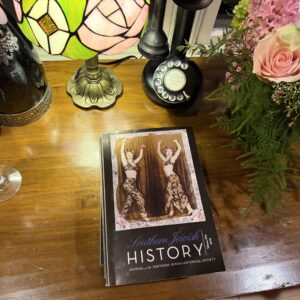
I had spent the morning searching for the lost history of forgotten showgirls, a passion of mine. I spun under centuries-old stone archways with dear friends after listening to ghost stories of old alchemists and art-filled streets mixed with the heartbreaking stories of the ones who never returned after the war.
I tilted my face to the sunlight like the secret sunflower I am, and just sighed as I felt something shift in my soul. I’ll call this moment “sunshiftmania.”
A day later, I was climbing into bed when I blurted out to my fellow globetrotters, “I feel changed. Something about Romania changed me. Does anyone else feel changed?”
Each of my glittering globetrotting glamour girls answered: “Me too. I feel changed,” but none of us could explain why or even how we were changed. We just knew it was so.
I returned home after this grand journey and tried to write about the soul shift. I didn’t want to stuff and squeeze the experience into mundane words, but I also didn’t want the “changing” to disappear into the chimerical land of things that can never be named.
I’m still searching for the words and if you have any ideas, please let me know. But in the meantime, I’m living in “lusquiver,” yearning, trembling, quivering with longing for more adventures.
But wait, for me “lus” doesn’t just mean lack, it also is the beginning of one of my favorite words, “luscious.” My luscious lusquiver state has me agreeing to plunge into my velvet pillows of sadness so I can also exuberantly embrace “yumtober,” “sunshiftmania,” and the deep deliciousness of all the love.